Showing posts with label zappa. Show all posts

Monday, March 08, 2010

A Prog Rock Guide to the Project/Object - Uncle Meat 1969

This album by the original Mothers of Invention came out during the decline of the summer of love. Frank Zappa had little sympathy for the hippie movement that was sweeping the western world at the time. There's no secret that he saw the whole thing as shallow and misguided. Looking back on that era with hindsight, it appears as though he was spot on with his assessment. All the optimism and hope that emanated out of the San Francisco area has panned out to be nothing but hot air (and pot smoke). While the rest of the world was gearing up for Woodstock, you get the feeling that Zappa was well into the 70s by this point of his career. October 1969 would bring about King Crimson's Court of The Crimson King and the start of Progressive Rock; Frank Zappa was already there, ahead of his time as usual, in April.

Uncle Meat was a bit of change of directions for The Mothers. This mostly instrumental album was their first double album since the debut Freak Out! and was almost unrecognizable in comparison. From the first notes of the title track you know that Zappa was taking huge steps forward in terms of his abilities as a composer. Having already dismissed the flower power movement on We're Only In It For The Money, Uncle Meat is more about pushing forward all sorts of musical boundaries. Though still classified as a 'rock' album, you get the feeling that Zappa was more interested in contemporary classical and jazz music at this point of his career. Steadily adding more musical-literate members to The Mothers in the late 60s, Uncle Meat presents Zappa the composer using his band as a small chamber orchestra. Zappa the producer was also taking on huge advancements, as there is no shortage of fancy tape manipulation and quick and quirky edits all over this album. The result is something that sounds as unique today as it did in 1969.

The centrepiece of the album resides on its fourth side. King Kong was Zappa the jazz fusion pioneer leading his band in an extended jam that travels the gamut of spaces and places. The main theme is easily one of Zappa's all time classics and would easily foreshadow his first solo album Hot Rats. If you're looking for something a bit more radio-friendly give Dog Breath, In The Year Of The Plague a shot. In four minutes you get a bit of catchy silly high-pitched vocals in the style of Only In It For The Money and then an instrumental section that perfectly sums up the rest of the album. Elsewhere you get more Doo-Wop parody in the form of the humorous and charming Electric Aunt Jemima, the neo-classical compositions The Legend of The Golden Arches and Project X and the avant guard in the form of Nine Types of Industrial Polution.

Don't get the impression that you'll be able to pick and choose individual tracks from this double album. Like pretty much everything Zappa did, it's best consumed entirely in one sitting. For an album with so many styles and shifts, it holds together surprisingly well as a whole. This is very true for it's original vinyl release, but probably less so for the CD version. You see, for reasons only known to Frank, the CD issue of Uncle Meat comes plagued with what fans have come to call "Penalty Tracks". Uncle Meat, in it's original form, was meant to be a soundtrack to a film that Zappa was working on at the time. He ran out of money and was unable to finish the film until some time in the 1980s. On the CD reissue he decided to add long audio excerpts from the film. These tracks go on for over half an hour and are really hard to listen to. They consist of people talking about, um...chickens and uhhh other things of no particular relevance. I've yet to see the completed the film, but I'll assume that you need the visuals to fully appreciate these pieces of dialog. As for as the album Uncle Meat goes, placing these tracks right in the middle of the CD destroys the perfection that existed on Vinyl. I might also mention the inclusion of the 1982 song "Tengo Na Minchia Tanta" (meaning "I've Got a Big Cock" in Sicilian), but I won't. Suffice to say it doesn't belong.

If you're new to Uncle Meat I highly recommending trying to track down a copy on vinyl. Not only is it missing the "Penalty Tracks" but it also sounds insanely better than the CD. In addition to adding tracks nobody wanted, Zappa covered the entire album with primitive 80s digital reverb on CD, making the whole album sound like cheap plastic. In comparison, the vinyl sounds full and lush. If you have no means to listen to vinyl and must resort to the CD, do yourself a favour and skip the adding fluff. You'll probably enjoy the album much more without it. All these technical issues aside, Uncle Meat is an essential part of any Zappa collection.


Monday, February 08, 2010

A Prog Rock Guide to the Project/Object - Apostrophe (') (1974)

1974 was the year that critics began to turn on Prog Rock. You see, up until that point Prog was generally considered a good thing. Critics appreciated the creativity and musicianship that was growing out of the scene up until that point. It was all happy and cheery and lovely for all... until Yes released Tales From Topographic Oceans. "That's it! They've gone too far! This is the most pretentious overblown piece of self-indulgence in the history of music bla bla bla" It went slowly but surely downhill from there.

There is an album that came out right around the same time that shows the other side of what Progressive Rock could be. Apostrophe(') has just as much musical skill on display as Tales, but instead of the serious 'high-art' that Yes were presenting, Zappa brought his silly sense of humour and irreverent satirical style to the table. When people are quick to harp on Prog's excessiveness and cite Topographic Oceans as example, I quickly 'whip-out' this sucker as counter argument. It has everything that any Prog fan wants: insanely jaw-dropping instrumental and compositional creativity, a complex and surreal concept and even an extended suite of continuous songs. What it lacks is the self-important arrogance that some listeners perceive when they dismiss Progressive Rock. (I have a hard time picking up on such things personally, Tales is pure fun to my ears) Zappa brings so much excitement to his compositions that an unknowing listener may not even realize just how complex things are instrumentally.

The album starts with the infamous tale of Nanook the Eskimo. The suite of four tracks that starts things off is really so bizarre and funny that it really couldn't be by anyone except Frank Zappa. I won't get into the details because, well, frankly (heh) it's hard to explain. Just know that you must "Watch out where the huskies go and don't you eat that yellow snow". As absurd as that line is, you only really realize the true silliness of it all when you find out that the backup singers are Tina Turner and the Ikettes. No foolin'.

But the Ikettes are hardly the main attraction of this album. The gigantic lineup assembled to play here is quite amazing. Who else but Frank Zappa could bring names like George Duke, Jack Bruce, Don 'Sugar-Cane' Harris, Sal Marquez and Jean-Luc Ponty to play on an album with songs titled "Nanook Rubs It" and "St. Alfonzo's Pancake Breakfast"? The level of musicianship on display is simply mind-boggling. Ruth Underwood's percussion alone is worth the price of admission. Please watch this video:


So while you are laughing away at the silly lyrics, keep in mind that there is really serious complex music happening here. Zappa's compositional skills were out of control by this point of his career. Take Cosmic Debris for example, a fairly simple and straight forward attack on the 'self-help' gurus that were popping up around that time in the States. Not only are there beautiful backup harmonies by the Ikettes, but the constant shifting rhythm section is superbly tight. The guitar solo is one of Frank's most classic and the tempo shift is so well executed that it almost appears seamless. The instrumental title track is a super professional jam session with Jack Bruce and Zappa on bass and guitar respectively. Imagine Cream but with Zappa taking the lead. Bruce's fuzzy bass tone goes so insanely well with Frank's lightning fast yet completely melodic lead guitar solo.

George Duke co-wrote Uncle Remus with Zappa. The gorgeous piano underlying the song is probably a direct result of this collaboration. The Ikettes are again very prominent here as Zappa's lyrics take on racism and civil rights. The final track "Stink-Foot" is probably an attack on advertising agencies who make up "imaginary diseases" to push products you don't really need. It features more interesting time changes and ends with one of Zappa's most explicit explanations of "Conceptual Continuity". We'll get into that whole subject in another post, on another day.

This is an album that works on so many levels. From the instrumentation to the silly and yet often poignant lyrics, this is Zappa at the peak of his abilities and is required listening to anyone who like Prog and Zappa - best served together.

Wednesday, December 02, 2009

LA Philharmonic Plays Zappa

Speaking of Frank Zappa, there seems to be a recent trend for many an orchestra to be playing his compositions lately. You have to understand this though; the guy fought for most of his life to have his 'serious' music to be played by a 'real' orchestra. In his autobiography he talked about how symphony orchestras only play music by dead composers because of a myriad of reason not excluding they didn't have to worry about paying royalties. Well, call it a self fulfilling prophecy. Now, almost 17 years since his death, you can go just about anywhere in the world and hear dead-man Zappa's 'serious' music being by just about anybody. Heck, even the LA Philharmonic put on a performance of pieces from Yellow Shark last night. Seems to be the way, the good composers are never fully appreciated until they croak. Poor Frank.


LA Philharmonic Plays Zappa on JamBase

EDIT: I found a review of last night's concert. Sounds like lots of fun. Read all about it.

A Prog Rock Guide to the Project/Object - Absolutely Free

This album was released in 1967! I really think history has almost forgotten just how innovative and ahead of their time The Mothers of Invention were. Zappa's first band were clearly breaking just about every rule in the book and doing so with style and class. Just to put into perspective how important the release date of this album is, consider that this is the same year The Beatles released Sgt. Pepper's, the Moody Blues released Days of Futures Past and Jimi Hendrix released Are You Experienced. There is little doubt that these are important and innovative albums in the overall picture of Rock music, but with Absolutely Free I do believe that Frank Zappa and The Mothers were making full blown Progressive Rock years before King Crimson apparently launched the genre properly with In The Court Of The Crimson King.

Hear me out. While The Beatles take a lot of the credit for inspiring the legions of Progressive bands that followed, The Mothers were really laying the blueprint for Prog in a much firmer way than Sgt Pepper's ever did. Firstly, The Mothers were pretty good musicians. In fact, one of the reasons Zappa wanted to join these guys was that they had better musicianship then most of the other bands in the L.A. music scene at the time. While future lineups of Zappa bands were clearly much more polished in this regard, these early Mothers of Invention could certainly play their instruments at a level that was pretty advanced for Rock n' Roll in the late 60s. Just listen to all the shifting tempos and styles that this album possesses. In addition to the musical chops, Zappa was experimenting with the form of composition in ways that other bands wouldn't try for another couple of years at least. The original vinyl consists of two "Underground Oratorios", each of which took up a side of the LP. The first side was simply called Absolutely Free and was a flowing suite of music revolving around the subject of vegetables. The second side was called "The M.O.I. American Pageant" and revolved around the boring plastic nature of Americans at the time. Zappa's social satire is pretty clear, Americans and vegetables are pretty much interchangeable in many regards. This may seem like an obvious statement in our post-modern satirical era, but in 1967 these were pretty daring statements.

So we basically have two side long suites. That's a staple of what was to come as the Prog bands of the 70s pretty much took this format to the extremes. The humour in the lyrics is pretty apparent, if the constant giggling doesn't point that out. Zappa and The Mothers create a fun almost circus-like atmosphere but then, almost casual, toss off really perfectly played high-brow classical music references almost seemingly. Check out Status Back Baby. This is a fairly straight forward parody of late-sixties bubblegum pop music, but then suddenly during the instrumental break Zappa starts playing a phrase from Igor Stravisnky's Petrushka on his guitar and then the full band joins in and nails the big ending of the famous bombastic section from the same ballet! A whistle blows and then they go seamlessly back into bubblegum mode to finish off the song. Need I remind you that this is 1967? How incredible is that? Considering the influence Stravinsky had on the Prog bands of the early 70s, this is yet more proof that Zappa nailed the genre before it was even created.

From the musical complexity to the 'out-there' subject mattered covered on epics like Brown Shoes Don't Make It, I can't think of another album from 1967 that pushes the boundaries of Rock music like The Mothers of Invention did with Absolutely Free. Of course it may be these very factors that has caused the album to be largely ignored by mainstream audiences of the day and subsequently its lack of appraisal today. Regardless, many Zappa fans consider this album to be among the most concise examples of his genius. There is little doubt that this is an essential album for any Zappa collector and fan of Progressive music. It's an important historical document and shines today with its music and social satire resonating as strongly as ever.

Wednesday, November 18, 2009

A Prog Rock Guide to the Project/Object - One Size Fits All (1975)

There are a few reasons why I believe the best way to experience this album is by tracking down a copy of the original vinyl:

1. The cover design is really something to behold. It's so full of tiny intricate detail that the tiny size of the CD jewel case simply cannot do it justice. You can spend hours staring at the Zappa-fied map of the cosmos trying to just understand the meaning of it all. It's really so overflowing with imagination that you can keep yourself entertained for hours without ever taking the record out of its sleeve.

2. The sound quality of it all. For whatever reason, Zappa on CD is a messy affair. It seems that he created the digital masters for the CDs at a time of very primitive digital technology. Frank simply couldn't resist all the bells and whistles and trappings of over using them. Although this album is hardly one of the worst examples, very early-80s digital reverb is dumped all over his catalogue. There is an excellent (albeit dated looking) website that you can spend the rest of your life going over, that boldly attempts to make heads and tails of each and every Zappa release. The original vinyl version is, however, one of the best sounding releases of its day. It's warm, lush and brimming with the full breadth of frequencies that your human hearing is capable of hearing.

But wait, what about the actual music? Hmm, just give me 40 minutes or so to listen to this sucker and I'll get back to you...

Wow, just....wow! I had to stop listening after just the first side because I was so overwhelmed by it all, and I've heard this thing countless times! Where to begin? How about the beginning? Inca Roads! An undisputed Zappa classic in every sense. Originally composed as an extremely complex instrumental, the lyrics about flying saucers landing in the Andes are certainly amusing but hardly the main attractive. Did I mention that this lineup features one of the most talented ensembles ever assembled by Frank Zappa (or anybody for that matter)? Well I should have. The percussion throughout this album is a marvel to gawk at, but nowhere is this more apparent than Inca Roads. Ruth Underwood and Chester Thomson are on fire here. Zappa was always writing the most complex marimba parts for Mrs. Underwood to tackle and she seemingly could handle it all and make it look easy at the same time! And then there is the guitar solo. You can think of this as a song within a song. It's so perfectly constructed and played you'd think Zappa worked on its composition for days, except he didn't. It was improvised live at a concert in Helsinki and pasted on here. Inspirational stuff.

While Inca Roads is the main attraction on side one, the quality throughout never drops. Can't Afford No Shoes is the least Progressive item on the menu, but its lyrics concerning the economic hardship of recession will probably ring truer today then they even did in the volatile 1970s. Sofa #1 may be one of Zappa's grandest instrumentals. You'd think it would have some sort of serious epic meaning behind it if it were not for the reprise that occurs at the end of the album (we'll get there later). Po-Jama People, Zappa's tribute to all those boring dull folks in the world (and boy, are there ever plenty of them) is another guitar showcase. I really can't think of another guitarist that was playing like that in the 70s. The licks here cover the full range from the dirty bluesy intro to the rousing solo in the second half of the track. If you don't have the ending coda stuck in your head for days after hearing it (Wrap 'em up, Roll 'em out, Get 'em out of my way, Hoy Hoy Hoy!) then you simply aren't human. Period.

(Takes a deep breath) Alright, give me another 20 minutes while I indulge in side 2...

Pffffff.....Jeez. Somehow the second side is seemingly more rampant with musical ideas than the first, and it's a whole minute shorter! This is unbelievable stuff. It's the kind of album that conflicts me as a potential aspiring musician and composer. On one hand, I feel so inspired by the sheer amount of musical ideas presented here, and the seamless skill on display executing said ideas, that I feel that there is just so many possibilities to create something likewise. On the other hand, I'm just so intimidated by the fact that all of this came out of one man's head that even trying to create something similar would certainly pale so much in comparison, it's not even worth attempting.

Take, for example, Florentine Pogen. In its first two minutes or so you hear sooo many musical ideas and riffs. How does he do it? They are all catchy and complex yet it flows seamlessly. In fact, the recording on the album was taken directly from this TV performance. That's right, it's all done live! This band was a well oiled machine. They make it look so easy and appear to be having fun while doing it to boot. Chester Thomson was completely wasted during the 80s playing with Phil Collins' Genesis. This is impressive playing. And how about Napoleon Murphy Brock on vocals? You know Zappa discovered this guy playing in some corny night club in Hawaii?

The second last track, Andy, is another contender for 'most musical ideas crammed into a delightful six minute package'. It's Progressive, yet has a bluesy soulful charm that makes it simply addictive to listen to. A masterpiece without a doubt. San Ber'dino is another track that, were it written by anyone else and included on any other album, would be hailed as an all time great song. Sadly, it's packed into an album with so many great pieces and composed by the most prolific artist of its time. It seems almost forgotten in time. And then the album closes with Sofa #2. Reprising the melody of the instrumental from side one, it lyrically is based on the idea that (and I'm not making this up folks) God is singing an ode to a giant maroon sofa that happens to be floating in space, in German! Just look at the album cover! There is the sofa, and there is God's hand, holding a cigar (of course).

You think that putting such silly concepts onto such beautiful melodies may have diminished their impact? You bet. By doing this time and time again throughout his career, Frank Zappa has proven that you can make music that is complex, challenging and progressive without taking yourself at all seriously and being pretentious. Why isn't this album, and many others by Zappa, considered the out-and-out classics that they are? The humour contained in his lyrics are so disarming that you might not even bother to appreciate the musical ideas that he kept churning out throughout his tragically short life.

This album is not the easiest one to get into. It's a dense work that is brimming with some of the best music of the time. My recommendation is to take your time. You'll need to listen to it a few times over before you start to appreciate its genius. Once you do, once you 'get' it, you will undoubtedly regard this album as an all time classic of Progressive Rock. It's Progressive Rock in the truest meaning of the term. Oh yeah, it's fun and catchy too!

On the next instalment, I'm going to take a look at one of the earliest examples of real Progressive Rock, The Mothers of Invention's Absolutely Free.

Wednesday, November 11, 2009

A Prog Rock Guide to the Project/Object - The Best Band You Never Heard In Your Life

If there is one thing I regret in my life it would have to be never attending a Frank Zappa concert. Thankfully there are many other things I regret in my life. Too many. Oh Jeez do I have regrets... sad convoluted mutated confusing regrets. So this is somewhere on a large sprawling list of many regrets. I won't disclose the rest of them here since, well, who cares? Besides me, they are my regrets after all. So mind your own damn business!!!

err....not sure what provoked that....moving on

Either way, the title of this 1991 release rings incredibly true to me. I never got a chance to hear this specific incarnation of Zappa's touring band (or any of his bands for that matter since I was either not-born of in diapers). Neither did many people apparently since the tour was canceled early on. Apparently there was just too much in-fighting and band member politics. Poor old Frank got very fed up with it all and was saying at the time that he never wanted to go on tour with a rock band ever again. Of course, we know now that he passed away shortly thereafter so he wouldn't even have the chance if he changed his mind. At any rate, the title to this live album, documenting some of the 1988 tour (his last), is apt for plenty of folks out there.

The reason I'm suggesting this as a launching point to a new fan's Zappa discovery is complicated and controversial. I am pretty sure that, regardless of what other Zappa freaks may believe, Frank specifically created a beginner friendly compilation from his extensive recordings from the 1988 tour. What I mean by this is that the track selection compiled here contains his more 'listener friendly' compositions. With the exception of 'The Eric Dolphy Memorial Barbecue' near the end of the album (and "A Few Moments With Brother A. West", who wants to listen to that? Very dated American political satire...), there isn't anything too avant-garde or atonal here. The focus is on tracks like Cosmik Debris, Zomby Woof, Inca Roads and The Torture Never Stops that are all showcases of Frank's humour, instrumental complexity, guitar skill and ability to just write catchy melodies.

Again, the title of the album hits the nail on the head. This is not only one of the largest bands Frank ever assembled, but absolutely jaw-droppingly skilled as well. If you are not familiar with Zappa's music then you can check out the cover tunes included here to get an idea of just how tight this band was. Ranging as far as Johnny Cash's Ring of Fire to Jimi Hendrix's Purple Haze, you quickly can recognize how painstakingly well rehearsed this band is. (I've read that Zappa rehearsed this band for six months before starting the tour) Just listen to the album's closer, a cover of Led Zeppelin's overated 'epic' Stairway to Heaven. Jimmy Page's infamous guitar solo is performed by the brass section almost note-for-note. If that doesn't give you a picture of just how skilled these musicians were, and also an idea of Zappa's creativity as a musical arranger, then you may never understand music in general. In fact Zappa's arrangment of Ravel's famous Bolero may have much of the same affect. It's a stirring rendition that tends to send shivers down the spine of unsuspecting listeners.

The only thing that may impede your enjoyment of this album are the dated references that show Zappa's strong political opinions in the late 80s and may confuse you now in the almost 2010s. You see, there was this televangelist named Jimmy Swaggart and....ah forget it. If you really want you can read this wikipedia article and understand what exactly they are going on about in the 'Swaggart Versions' of songs on the second disc. Just understand that as rehearsed and tight as Zappa's touring bands were, Frank always insisted on creating an air of improvisation and unpredictability at his concerts, and this could include changing the lyrics to songs on the spot. I just ignore these now dated references and enjoy the music being played because that's really what it's really all about.

All in all, this album is a showcase of Zappa live. The musicianship is simply increadible, the brass section sounds really cool (check out the opener Heavy Duty Judy or Let's Move To Cleavland), the guitar solos are mighty impressive (Zoot Allures and The Torture Never Stops Part Two) and the whole thing is just lots of fun to listen to as a whole. The way it's structured makes it sound as though it is one continuous concert, but in fact is carefully collected and edited by Frank from throughout the 88 tour. I'm pretty sure he was going for a 'listener friendly' experience here so his more adventurous instrumentals and cruder lyrics are ommitted on this release. For all these reasons I'm pretty sure this is an excellent place to start your Zappa adventure.

On the next installment, we are going back to the early 70s to explore the forgotten Prog Rock classic "One Size Fits All".


Tuesday, October 27, 2009

A Prog Rock Guide to the Project/Object - Introduction

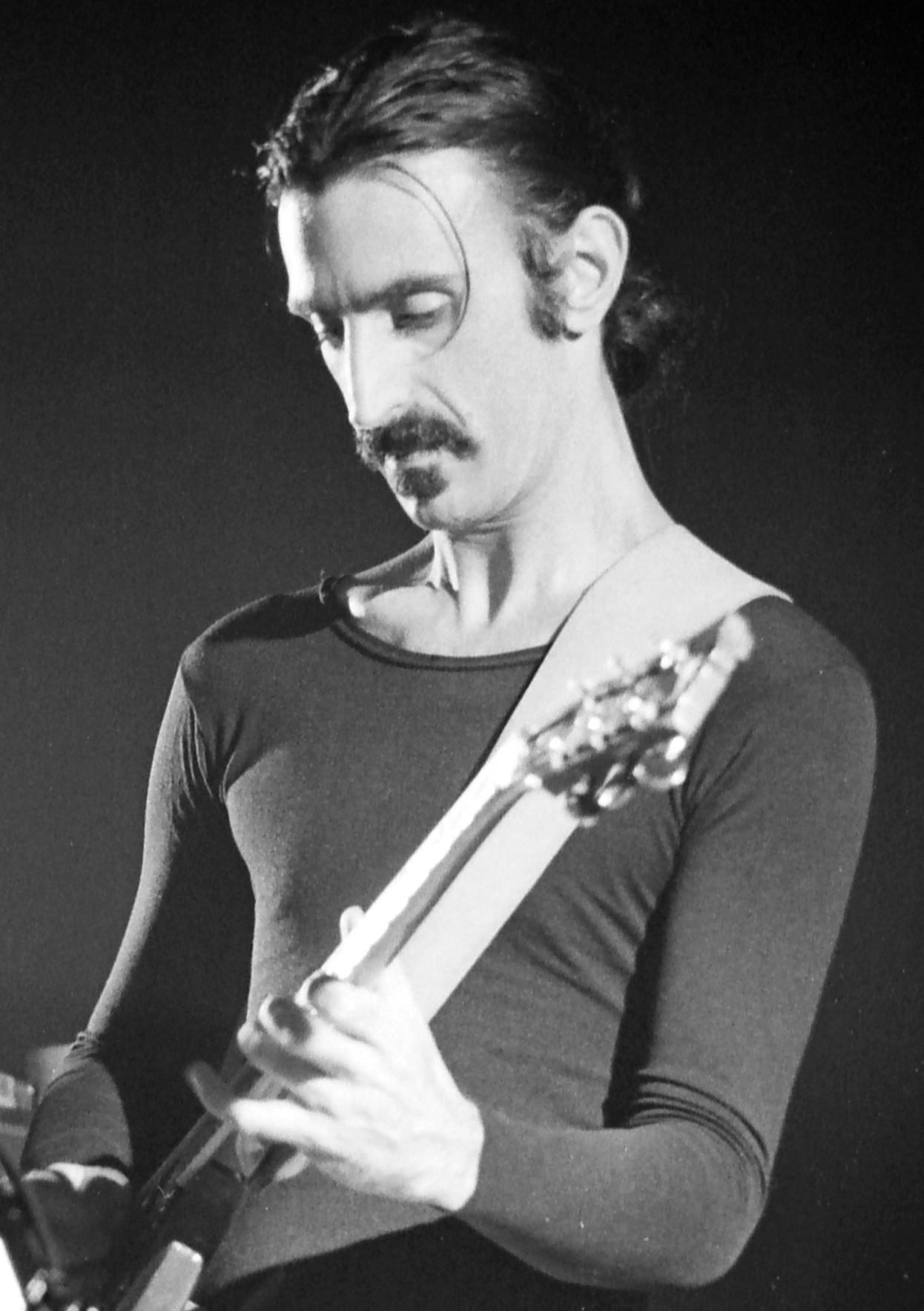
Here begins a new series of posts dedicated to Frank Zappa. Let me try to explain...

Well. Well well well. Where to begin? Hmmm... You see, dear reader, I couldn't imagine a task in the music world more difficult then trying to "get into" Frank Zappa's music. All you have to do is take one glance at the sheer amount of albums the guy put out over his short life to see how daunting trying to grasp his work is. Go ahead, take a look. See what I mean? It just keeps going and going and going and going. Now keep in mind that the bulk of the man's music is dense, complicating, often drifting into the realms of atonal and avant-garde. Don't forget the fact that his music is totally unique. No other composer sounds like Zappa. His influence range as far as 50s Doo-Wop to the avant-garde composers like Edgard Varese and Igor Stravinsky. His music often drew directly from these inspirations but were not limited to them. Not by a long shot. I'd be hard pressed to find a composer more diverse than Zappa. He tried pretty much anything he felt like, often only once. Not all his music was inaccessible either, far from it. The guy had a knack for good melody and even had a few hit records here and there. The hardest thing for a Zappa beginner is deciding where to start.

Zappa was also a keen social-satirist. His lyrics often were meant as a critique on all the silly shallow and self-important figures in life. Nobody was safe from Zappa's sharp tongue and willingness to express his opinion. The problem I find is that this aspect has very quickly overshadowed Zappa's music. His name often creates images of outrageously offensive lyrics, over the top stage performances and an anti-establishment attitude. Very rarely is Zappa seen as I think he should be perceived: One of the greatest composers of the 20th Century.

Since this is a music blog I'm going to focus on Zappa the composer and Zappa the musician. There has been so much written about the guy from all angles that in order to present some new takes on his life and work I'm going to focus on what I know: Music as Art. Zappa's music ranges from all possible genres. He was a classical composer (in fact his first stabs at writing music was indeed composing chamber music as a teenager), a big band jazz composer (the focus for most Prog fans, rightly or wrongly), a pioneer of live recording (a few of his 'studio' albums were indeed recorded live in concert and spruced up and overdubbed in the studio) and a driving band leader who pushed the musical abilities of anyone who joined him to the very limits.

I wouldn't recommend you try to 'learn' his music in the same way I did. I've always liked a few Zappa albums, but it was only in the last few months that I've really dug into all his work. And I really went deep; I tried to do it all in one go. The whole thing, without any breaks. This is a very demanding and dangerous task. Unless you are keen on going mad I say do not do this. Instead explore Zappa in chunks. Pick a few albums and listen to them until you feel comfortable and familiar with them. Then, take a break. Go listen to someone else, something simple and enjoyable. I'm certain that Zappa's brain was super-sized and could handle all of this vast and complex music, but for the average human being it's simply too much to synthesize at once.

For the next post in this series I'm going to the end of Zappa's touring career: the 1988 tour. In particular the album I'm going to explore is "The Best Band You Never Heard In Your Life". It may be the perfect introduction to the world of Zappa and should be ideal for the Prog-Minded listener.

Until then, let me know what comes to mind when you think of Frank Zappa. Are you a life-long fan or are you just a casual listener who knows the "Strictly Commercial" compilation and not much else?

Don't forget
KEEP THE PROG ALIVE!